(ANIMAL SCIENCE/EXTINCTION) It’s alive! Well, not quite, but what if they could be alive…again? Check out the gallery and video below to learn more about de-extinction and the species that could possibly be brought back to life. — Global Animal
Huffington Post
What would happen if humans could resurrect long-extinct species?
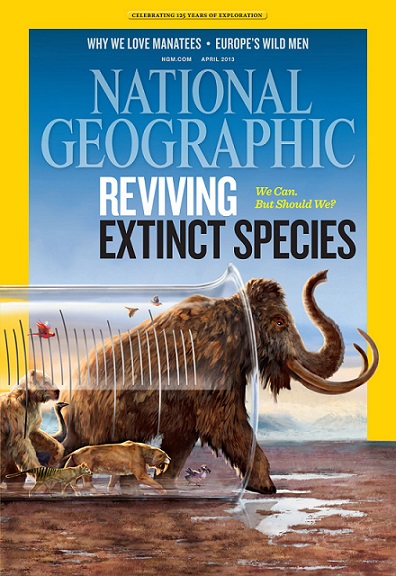
In its April issue, National Geographic magazine focuses on the fascinating and controversial topic of de-extinction. According to the IUCN red list, 63 species are already extinct in the wild, and thousands more are critically endangered. De-extinction is a new frontier for scientists to explore rebirth through genetic manipulation, and could potentially restore these animals to the planet.
The concept prompts a number of ethical and scientific questions, as discussed at National Geographic’s TEDx De-Extinction event on March 15th. Will bringing a species back from the brink of extinction disturb the natural order of things, or add richness to failing eco-systems? What would it mean for conservationists? Should we do it?
Learn more about de-extinction in the latest issue of National Geographic magazine and check out the amazing images below.
Photos and captions courtesy of National Geographic
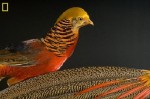
Pictured are two golden pheasants (Chrysolophus pictus), a species native to mountainous forests of western China. Photo Credit: Joel Sartore, National Geographic
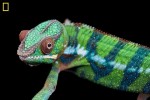
The striking panther chameleon (Furcifer pardalis) is native to tropical forests of Madagascar. The reptile is highly prized by collectors for its bold colors and relatively large body size (up to 9 inches or 23 centimeters long). Photo Credit: Joel Sartore, National Geographic
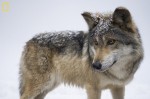
The Mexican gray wolf (Canis lupus baileyi) is the most rare subspecies of gray wolf in North America. It is listed as critically endangered by the IUCN. Photo Credit: Joel Sartore, National Geographic

A museum worker inspects a replica of a woolly mammoth (Mammuthus primigenius), a species that went extinct 3,000 to 10,000 years ago. In March 2012, scientists in Russia and South Korea announced a partnership to try to clone the mammoth and gener. Photo Credit: Jonathan S. Blair, National Geographic
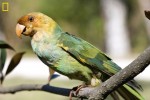
The Carolina parakeet (Conuropsis carolinensis) was the only native species of parrot in the eastern United States, having ranged from southern New York to the Gulf of Mexico, and as far west as Wisconsin. Photo Credit: Julie Dermansky, Getty Images
Should We Bring Extinct Species Back to Life?
httpvh://youtu.be/a_hgCM8XZkk
More Huffington Post: http://www.huffingtonpost.com/2013/03/21/deextinction-photos_n_2910166.html