


Alisa Manzelli, Global Animal

Who can dismiss the People for the Ethical Treatment of Animals’ countless victories for animals and their welfare? Since their start in 1980, PETA has actively changed society by standing up for the lives of millions of animals.
Whether they are promoting a healthy vegan diet, curbing the fur trade, influencing cruelty-free product marketing, or working to implement non-animal testing methods, PETA has been the driving force behind many groundbreaking advances in animal rights.
However, the question behind PETA’s euthanization policy remains in the center of hot debate as many activists believe it is wrong and even hypocritical for one of the world’s leading animal rights organizations to support the practice.
The organization is once again under attack following a scathing blog post published in the Huffington Post in April. In the detailed article, Nathan Winograd, executive director of the No Kill Advocacy Center, unveils the numbers behind PETA’s “kill rate,” positing shelters should only euthanize animals who are essentially unadoptable and cannot be rehabilitated due to aggression or health reasons.
Winograd writes, “PETA is an organization that publicly claims to represent the best interest of animals — indeed their ‘ethical treatment.’ Yet approximately 2,000 animals pass through PETA’s front door every year and very few make it out alive.”
PETA’s euthanasia statistics are available to the public on on the Virginia Department of Agriculture and Consumer Services (VDACS) website in accordance with Virginia’s Sunshine Law, which requires animal shelters to report the number of dogs and cats brought in each year—including how many are euthanized and how many are adopted.
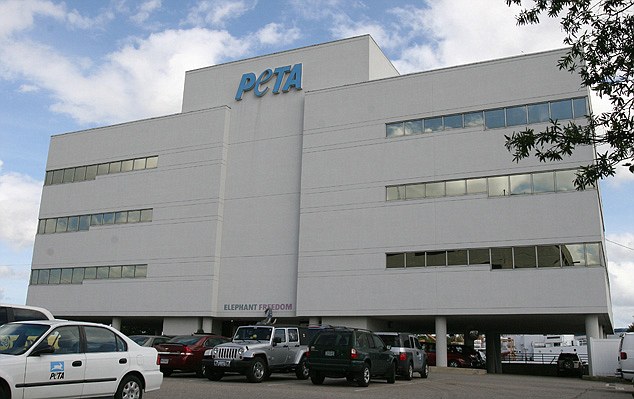
The data reveals nearly 90 percent of the animals—1,647 cats and dogs—sheltered at PETA’s headquarters in Norfolk, Virginia in 2012 were euthanized, and only 19 animals were adopted into new homes.
Further figures indicate PETA has euthanized a total of over 29,000 animals (mostly dogs and cats) at their headquarters, and the organization’s euthanasia rates have only been increasing.
In addition, out of the 31,815 animals admitted to PETA shelters since 1998, only 3,159 were adopted—signifying a 9.7 percent adoption rate and an 87.2 percent kill rate.

These numbers are in stark contrast to those of other nearby shelters. For instance, in the same city, in 2009, the Norfolk City Pound euthanized 54.7 percent of its dogs and cats. And in 2008, the Norfolk SPCA found homes for 86 percent of its dogs and cats and euthanized only 5.3 percent.
Yet most can agree PETA’s euthanasia statistics are just a small fraction of the total animals euthanized across the U.S. annually. According to the Humane Society of the United States (HSUS), around six to eight million cats and dogs enter shelters every year, and while three to four million animals are adopted, approximately 2.7 million healthy, adoptable dogs and cats are euthanized.
Winograd along with many others who are staunchly opposed to PETA’s practices believe PETA euthanizes such a large number of animals due to financial reasons.
Despite the fact that the organization reported an annual revenue of more than $34 million in 2009, Daphna Nachminovitch, senior vice president of cruelty investigations at PETA, has dismissed the idea that there is a financial motive behind PETA’s practice. She says shelters don’t cost much money to build or maintain, but when they are jam-packed with homeless pets, the caged animals suffer.
“Money can’t buy a good home, so it’s not a matter of money,” she said. “You could build the nicest shelter in the world, but if you don’t have homes for them, they’re still going to sit in a cage.”
But according to further inspection reports by the VDACS, the PETA facility “does not contain sufficient animal enclosures to routinely house the number of animals annually reported as taken into custody…The shelter is not accessible to the public, promoted, or engaged in efforts to facilitate the adoption of animals taken into custody.” However, PETA still met the legal requirements, and following a full legal analysis of PETA’s shelter operations, the VDACS renewed PETA’s shelter license.
In addition, routine inspections often found “no animals to be housed in the facility” or, at best “few animals in custody,” despite thousands of them impounded by PETA annually.
“90% [of the animals] were euthanized within the first 24 hours of custody,” according to the Virginia Department of Agriculture inspector.
Winograd asks, “How can people adopt animals from PETA when they kill the animals they acquire within minutes without ever making them available for adoption? How can people adopt animals when they have no adoption hours, do no adoption promotion, and do not show animals for adoption, choosing to kill them without doing so? In fact, when asked by a reporter what efforts they make to find animals homes, PETA had no comment.”
There is no doubt PETA adopts out animals, as anyone can see by looking through PETA’s website. However, the real question is how many?
President and co-founder of PETA Ingrid Newkirk’s rebuttle entitled Euthanasia: We Won’t Run From What Needs To Be Done! claims, “PETA’s statistics are also often used, as they are being used now, in a truly perverted way by some ‘no-kill’ evangelists to try to turn people away from the ‘evil’ of what is actually a dignified, merciful release from suffering.”

Newkirk’s article—also published in the Huffington Post—features numerous graphic photos of animals who are obviously suffering from extreme health issues.
“They never give a complete picture, and they always use inflammatory language and labels like ‘puppies’ and ‘kittens,’ even if the animal was a 17-year-old dog who was unable to breathe properly because of a heart condition,” Newkirk continued.
Newkirk claims these figures are “deliberately chosen” and “do not include perspective.” She emphasizes how critics of the no-kill movement overlook PETA’s work with no- and low-cost spaying/neutering and other veterinary services, and claims that many of the no-kill shelters in the surrounding area often refuse admission to animals because they are constantly overpopulated with homeless pets.
In addition, Newkirk affirms these shelters often reject “undesirable animals” who are injured, sick, or dying, and subsequently bring them to PETA’s headquarters, which then “bears the veterinary or euthanasia costs.”
Newkirk turns our attention to the underlying problems behind pet overpopulation as she urges the public to “ask themselves if they are spaying and neutering their own animal companions, helping people with a low income ‘fix’ theirs, adopting from shelters instead of buying from breeders and pet stores, funding education campaigns about proper animal care and adoption (among other things), and demanding higher animal-protection standards in their own communities.”
Newkirk maintains, “PETA is proud to continue to stand tall and roll up its sleeves to help animals.”
PETA has been a long-time critic of the no-kill movement, claiming many no-kill shelters are unable to provide proper care for the flood of animals entering their systems.
For instance, the Cattaraugus County SPCA has been under scrutiny for a number of years, with countless former volunteers and board members calling the rural New York shelter a “perversion of the no-kill movement.”
A PETA blog post entitled Why We Euthanize reads, “I always wonder how anyone cannot recognize that there is a world of difference between painlessly euthanizing animals out of compassion—aged, injured, sick, and dying animals whose guardians can’t afford euthanasia, for instance—as PETA does, and causing them to suffer terror, pain, and a prolonged death while struggling to survive on the streets, at the hands of untrained and uncaring ‘technicians,’ or animal abusers.”
PETA writes, “It’s easy to point the finger at those who are forced to do the ‘dirty work’ caused by a throwaway society’s casual acquisition and breeding of dogs and cats who end up homeless and unwanted, but at PETA, we will never turn our backs on neglected, unloved, and homeless animals—even if the best we can offer them is a painless release from a world that doesn’t have enough heart or homes with room for them.”

Although many no-kill advocates claim PETA needlessly kills puppies and kittens, the organization stands firm in their statement that the animals they take in at the center are unadoptable.
‘We have a small division that does hands-on work with animals, and most of the animals we take in are society’s rejects; aggressive, on death’s door, or somehow unadoptable,” Jane Dollinger, a PETA spokeswoman, said.
However, the label “unadoptable” can be viewed as a subjective term. After all, even the dogs rescued from Michael Vick’s Bad Newz Kennels—who many believed were “abused beyond resocialization”—were compassionately given another chance and “have gone on to earn impressive accolades, and all have proven themselves to be cherished family companions,” according to BadRap director Donna Reynolds.
PETA is said to refer animals labeled as adoptable to nearby, open-admission shelters like the Virginia Beach Society for the Prevention of Cruelty to Animals, where they have the best chance of being seen and finding a new home.
“Euthanasia is not a solution to overpopulation but rather a tragic necessity given the present crisis. PETA is proud to be a ‘shelter of last resort,’ where animals who have no place to go or who are unwanted or suffering are welcomed with love and open arms,” PETA said.
While many argue the no-kill movement is redefining what an animal shelter is nowadays and succeeding in saving 90 percent of homeless animals, the Association of Shelter Veterinarians recognizes shelters have differing philosophies and methods and does not provide any strict rules or guidelines on euthanasia.
“Our philosophy is that whenever euthanasia is performed, it should be done compassionately and humanely. The decision to euthanize an animal rests with a shelter’s staff and should be based on their policies and knowledge of the animal’s health and behavior status,” according to Dr. Jeanette O’Quin, President of the Association of Shelter Veterinarians.
Yet one Norfolk-area veterinarian, Dr. Ronald Hallstrom, claims euthanasia is a philosophical issue. He recalled a time when animal control brought him a dog with three severely injured legs, leading him to decide to put her to sleep. But when he put the needle into her leg, she looked up at him and he changed his mind. Daisy, he says, is now a “wonderful, wonderful pet.” But not every animal brought to him is like Daisy.
“If you put a value on the life of an animal, you have an obligation to make the best decision,” Hallstrom said. “Euthanasia of the animals that don’t have owners should be performed by people that are rational and are using sound judgment.”
Although PETA has done stellar work over the past 25 years, many have some fundamental disagreements when it comes to the organization’s stance on companion animals.
PETA writes on their website, “We at PETA very much love the animal companions who share our homes, but we believe that it would have been in the animals’ best interests if the institution of “pet keeping”—i.e., breeding animals to be kept and regarded as ‘pets’—never existed.”
However, many argue that having a pet is some people’s only connection to the animal kingdom as animal companionship builds compassion and promotes peace amongst all living beings.
Others claim it seems crazy for PETA not to differentiate between wild animals and domestic pets who have been living among humans for thousands of years. After all, dogs and men have lived together and shared a mutually beneficial coexistence that has developed over approximately 130,000 years.
“In my book, the only time it’s acceptable to kill animals is the same as the only time it’s acceptable to kill people: when their illness is painful and terminal. Anything else is a speciesist double standard. As soon as I hear of a campaign to kill homeless people because it’s ‘more humane’ then I might consider it an acceptable option for homeless animals too,” one reader said.
The nation’s largest sanctuary for abused and abandoned animals, Best Friends Animal Society (BFAS), writes, “Newkirk once said, ‘PETA believes euthanasia is the kindest gift to a dog or cat unwanted and unloved.’ We simply couldn’t disagree more. The kindest gift to a homeless animal is a good home…Any organization that’s aspiring to a leadership role in relation to companion animals needs to be encouraging people to save more lives, rather than to go on repeating the failed policies and practices that helped create the problem in the first place.”
A pioneer of the no-kill movement, BFAS works nationwide to promote pet adoption, spay-and-neuter services, and humane education programs, and has played a large role in helping the Vick dogs overcome their violent pasts. Home to Dogtown, a gated community for rescued dogs, BFAS writes on their website, “Along with top-of-the-line medical care, these dogs get all of the love and training they need to recover from their pasts so that they can move on to permanent, loving homes, which most do. For the rest, Dogtown is home for as long as they need it to be.”
BFAS continued, “While PETA is in the forefront of many animal-related issues, they are way behind the times when it comes to companion animals. We would hope that they will continue to lead in the areas where they do well, and to stay out of areas in which, by their own words and deeds, they have no positive contribution to make.”
Where do you stand on PETA’s so-called “deadly practice” and the no-kill movement? Do you feel PETA should redirect their efforts to emphasize pet adoption and rehabilitation? Share your thoughts in the comments section below.


