Kayla Newcomer, exclusive to Global Animal
Halloween is slowly creeping up on us, accompanied by the eerie, spiritual vibes of the season. The spooktacular holiday is often associated with both mythical and real-life “spirit animals.”
Werewolves, owls, and cats, for example, are no strangers to any Halloween tale. However, it may be shocking to learn that the idea of sacred “spirit animals” is not a new one—it’s a topic that has been traversing cultures for centuries.
Majestic animals across the world have earned status in many cultures as sacred, with Native American “spirit” or “totem” animals at the forefront of recent discussion. Sparked by recent news of the slaying of an albino moose by hunters in Nova Scotia last week, the Halloween spirit has taken a different twist.

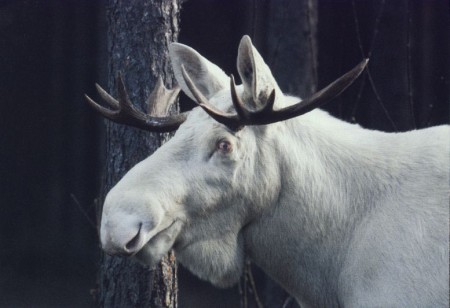
In the Cape Breton Highlands of Nova Scotia, three hunters recently shot and killed a rare albino moose. Their actions, along with posts of the awful deed on social media websites, elicited an outraged response from the indigenous Mi’kmaq community.
Mi’kmaq hunter Danny Paul said to the Canadian Broadcasting Association:
“We know the significance and we’ve been teaching that to the non-native population for almost 500 years — about the importance that this and other white animals played in our lives.
We are not to harm them in any way, shape, or form because they could be one of our ancestors coming to remind us of something significant that’s going to happen within our communities.”
Since the backlash surrounding the moose’s death, the hunters have agreed to return the hide to Mi’kmaq Millbrook First Nation Chief Bob Gloade, who is advocating the passage of legislation to protect the sacred white moose in the future and to build a better relationship between the aboriginal and non-aboriginal people in Nova Scotia.
The hunters claimed to not have known the implications of the hunt, unaware of the white moose’s sacred nature.
According to Gloade, “They’re going to set an altar where the hide will be. There will be offerings and there will be prayers…It’s a way of releasing the spirit of the animal back to its rightful place.”
Instances like the one above are not uncommon. It’s comparable to the Cherokee bear incident that occurred in North Carolina as well as the British Columbian White Bear spotting, and will most likely remain an open discussion in years to come.
In the meantime, take a look at ten of the world’s most sacred animals in the gallery below. Hopefully, their spirits remain appeased this particular holiday season.
-
- Perhaps the most well-known sacred animal is the cow. Revered by the world’s 900 million Hindus, the cow enjoys many religious perks in Hindu communities. The slaughter of cattles is even banned in several Indian states. Photo Credit: Washington Post

-
- An estimated one in 10 million buffalo are born with the rare albino genetic trait. Like the albino moose, the white buffalo is sacred to several Native American tribes. Photo Credit: gslc-bsa.org
-

- Whales are considered sacred in some parts of Vietnam, so when one dies offshore or by beaching, it often becomes a religious experience. Photo Credit: The Guardian

-
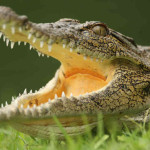
- In the town of Paga in northern Ghana along the border with Burkina Faso, crocodiles and humans live side-by-side. Believing the crocodiles contain the spirits of their ancestors, the townspeople live and play with the animals. Killing or harming a crocodile is forbidden. Photo Credit: NPR
-

-
The Karni Mata temple in India is home to thousands of rats. Far from being considered vermin, they are instead cared for and allowed to roam freely. Rats are said to be the reincarnations of human spirits. Photo credit: APOPO

-
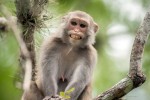
- In Ubud, Bali, a 27-acre forest known as Monkey Forest is home to over 500 of these creatures. Hindu practitioners view the animals as the sacred incarnations of monkey gods. Photo Credit: Barcroft Media

-

- In Karnataka, India Serpent deities are worshiped. The worship of snakes is present in several old cultures and traditions including India, Egypt and Native American culture. Photo Credit: bbc.co.uk
-
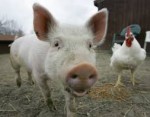
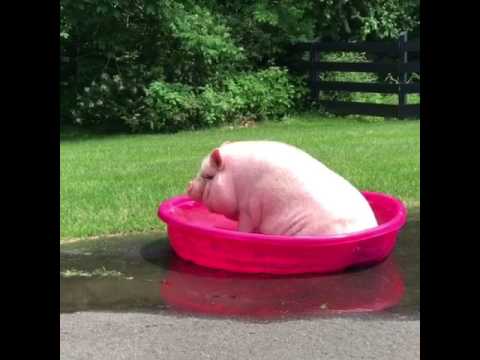
- In ancient Egypt pigs were considered as sacred to the god. Their god appears as a pig with erect bristles and who watched for storms, darkness, deserts, and chaos. Photo Credit: Washington Post

-
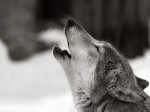
- The wolf holds a significant position in foundational mythologies of Eurasia and North America. The Tlingit community god name means “wolf,” and they worship a wolf-head, and the shamanic Turkic believes they are descendants of wolves. Photo Credit: Facebook

-

- Photo Credit: Getty Images